Miloš Obilić in Serbian Tradition, History, and Popular Culture
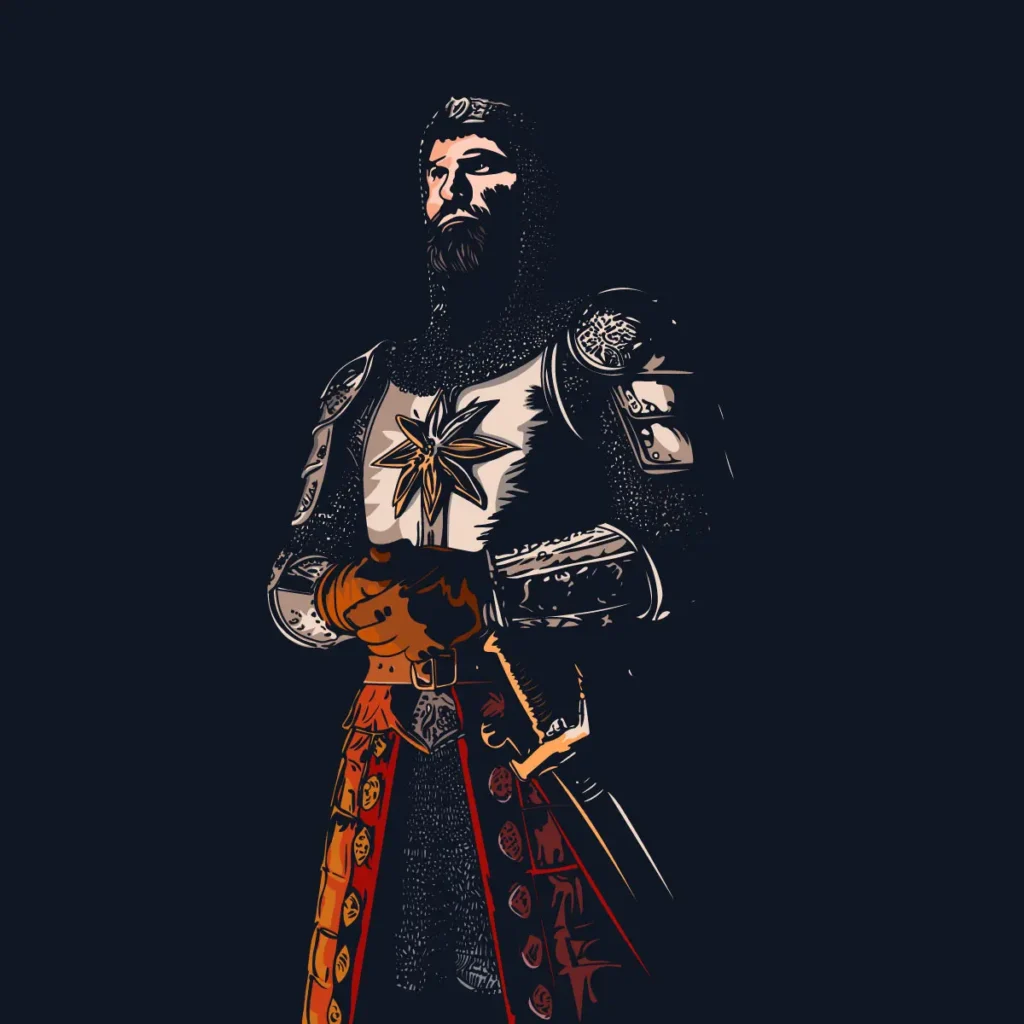
Miloš Obilić is one of the most well-known names in Serbian history and tradition—a symbol of courage, loyalty, and the fight for freedom. His name has taken on a near-mythical status, frequently appearing in folk songs, historical legends, and popular culture. Obilić is often portrayed as a national hero whose legendary deed played a key role in shaping the historical consciousness of the medieval Balkans and the Serbian people. He is especially revered in Montenegro, where he represents an ideal that every honorable man and warrior aspires to.
The Historical Miloš Obilić
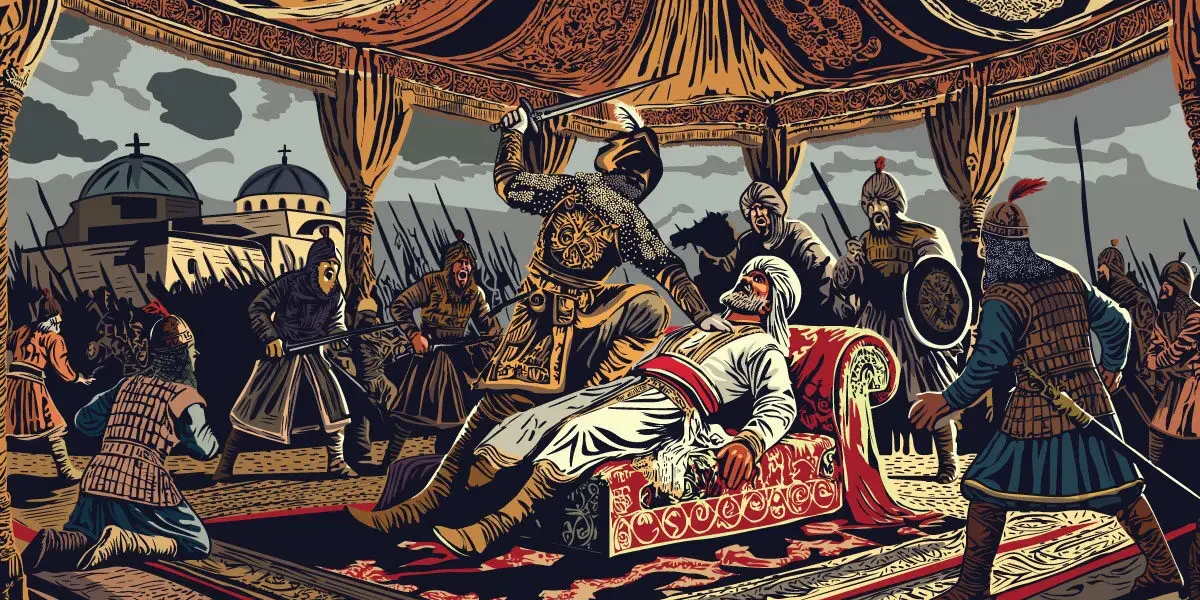
Miloš Obilić lived in the 14th century and is best known as the hero of the Battle of Kosovo in 1389. The decisive moment of the battle was his assassination of Sultan Murad I—an act that remains the only case in the entire history of the Ottoman Empire where a sultan was killed on the battlefield. This deed became a powerful symbol of resistance against the Ottoman Empire, and along with Prince Lazar, Miloš Obilić became a central figure in the battle that evolved into the foundational myth of the Serbian people.
His legend is one of the cornerstones upon which Serbian national identity was built—so strong and enduring that it is considered one of the key factors in the survival of the Serbian spirit during centuries of foreign rule. It served as a wellspring of inspiration and strength for national liberation movements throughout Serbian history.
Miloš Obilić in Folk Tradition
Folk epic poetry played a crucial role in shaping the image of heroes, and Miloš Obilić was one of its most prominent characters. In the epic tradition, Obilić is portrayed as a brave warrior, loyal to his ruler, and a symbol of resistance against foreign invaders. Many songs depict him as a hero who not only died courageously for his ideals but as a symbol of the nation’s struggle for survival.
Numerous folk legends revolve around the Battle of Kosovo, Obilić’s heroism, his conflict with Vuk Branković, Branković’s betrayal, and Miloš’s fulfilled oath at the prince’s supper. According to one legend, Miloš and Vuk, both married to daughters of Prince Lazar, were set against each other by their wives. Another story suggests that their rift stemmed from a duel in which Miloš humiliated Vuk. On the eve of the battle, Branković accused Miloš of treason, prompting Miloš to swear he would kill the Turkish sultan to prove who was truly loyal. According to legend, he fulfilled his oath and assassinated the sultan, after which he was killed, along with Prince Lazar. Branković allegedly fled the battlefield, committing betrayal, which was cited as the reason for Serbia’s defeat.
However, this narrative is not historically accurate. Vuk Branković continued to resist the Ottomans, refused to send troops in Ottoman campaigns, and eventually died in Turkish captivity. After the death of Lazar’s son, Despot Stefan Lazarević, the Branković lineage came to power and later led Serbian resettlement in southern Hungary. This undermines the betrayal narrative, suggesting that the Branković family would not have retained such influence if Vuk had truly committed the greatest act of treason in Serbian history.
Furthermore, the Serbian army was not decisively defeated in the battle. The state persisted, unlike the immediate collapse of territories under the Mrnjavčević brothers after the Battle of Maritsa, where their defeat directly resulted in Ottoman control and vassalage of Prince Marko.
In folk tales, Miloš Obilić reached a status similar to heroes of Greek mythology. His supernatural strength and power are often explained by having a fairy mother named Jelisavka or a dragon father, marking him with a dragon’s sign. Another version says he was nursed with mare’s milk, and Ottoman sources call Murad’s assassin “son of a mare,” possibly explaining the surname Obilić, derived from “Kobilić” or “Kobilović.”
Like all great heroes, Miloš had a legendary horse named Ždralin, as mighty as Alexander the Great’s Bucephalus. Ždralin, said to be so massive he towered over other horses, shared his master’s fate, perishing in the battle. Legends say they had never been injured in any prior combat. One version states Miloš launched a direct charge through the Turkish lines, more plausible than the “surrender and ambush” tale often told.
Naturally, such a hero had a virtuous wife, believed to be Vukosava, the daughter of Prince Lazar and Princess Milica. Some sources, including Mavro Orbin’s “Kingdom of the Slavs”, confirm this. Miloš also had a sister to whom he dedicated a monastery—Kaona, near Šabac. Other religious foundations attributed to him include Čokešina Monastery and Tumane Monastery.
The location of his birth and grave remains uncertain. Legends point to numerous places: Miloševac in Pocerina, Poreč in eastern Serbia, near Kruševac, Pirot, Raška, Herzegovina, and Kosovo (village of Obilić). His grave is believed to be in Kosovo, possibly in the village of Kisela Banja, where archaeological remains of a medieval church known as “Miloš’s Church” were found. Another potential site is Ravanica Monastery, where a grave matching folk descriptions was discovered near Prince Lazar’s sarcophagus. Tumane Monastery is also cited.
He was canonized in the 19th century, with his feast day on Vidovdan—the date of the Kosovo battle. His image appears in frescoes across the Serbian Orthodox world, including Hilandar Monastery, churches near Niš, and in North Macedonia.
Miloš was one of three legendary blood brothers, alongside Kosančić Ivan and Toplica Milan, elite warriors and scouts who infiltrated the Ottoman camp before the battle and sacrificed their lives in the fight.
Miloš Obilić in Popular Culture
In modern culture, Miloš Obilić remains a significant figure across various media—literature, painting, film, and comics. He is often depicted as a heroic ideal, blending real and mythological elements. His image symbolizes resistance to empire and the yearning for national freedom. He appears prominently in epic poetry, historical novels, and dramas, including “The Mountain Wreath”. He is considered one of the most influential Serbs in history.
His name is also carried by a football club—FK Obilić, which, after the breakup of Yugoslavia, was the only team besides Red Star Belgrade and Partizan to win the national championship.